
CIM State of the Union 2026
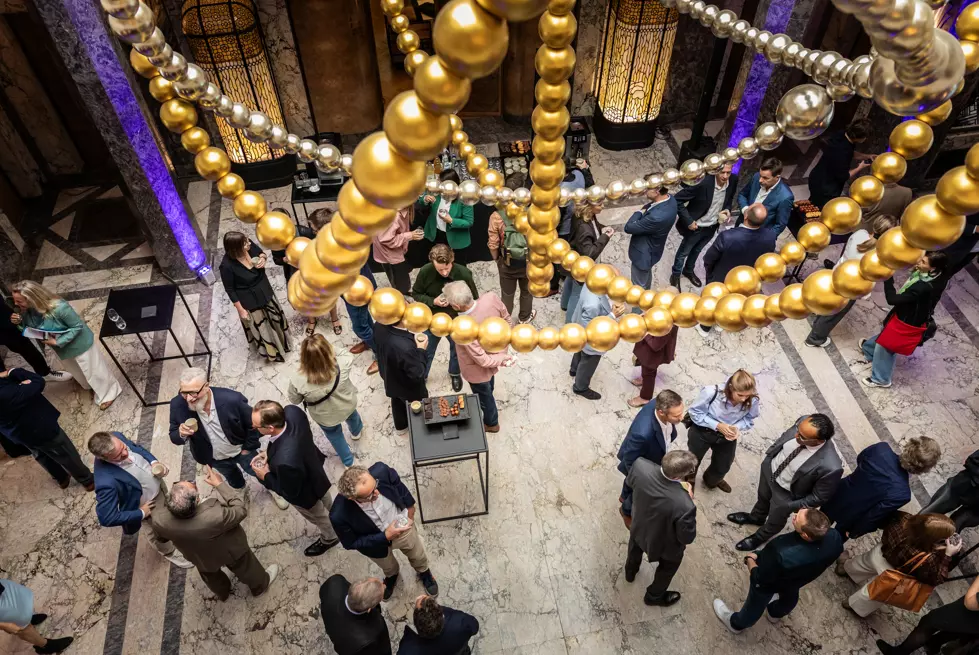
The third edition of the State of the Union took place on September 28 in the magnificent setting of Villa Empain in Brussels. The CIM and the Advertising Council once again served as organizers.
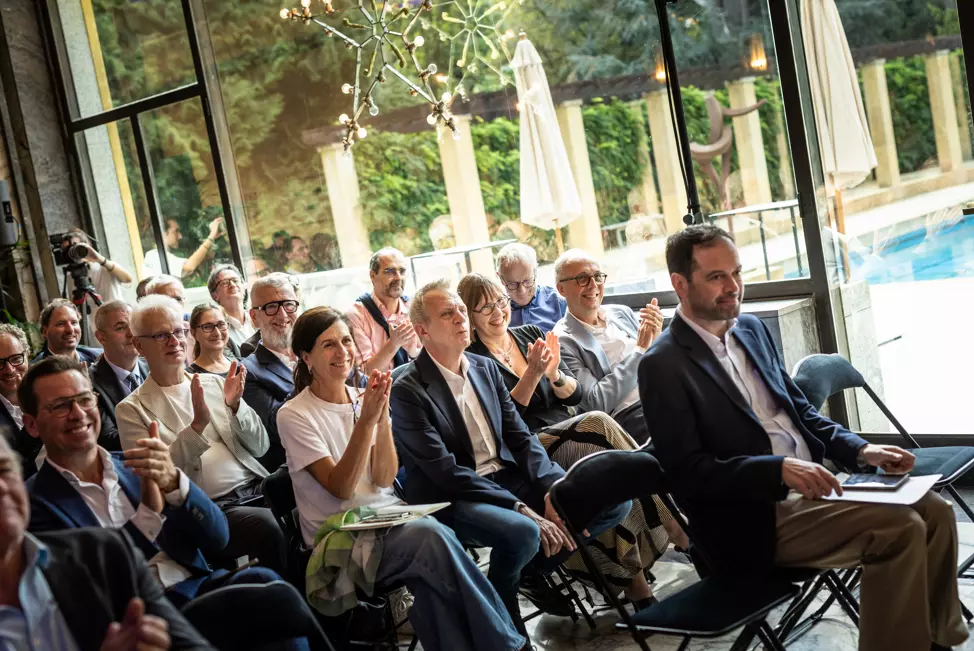
Local unity is strength
The main conclusion following the CIM and Advertising Council’s State of the Union? The ecosystem of Belgian media, advertisers, and agencies is pulling in the same direction more than ever. Although no one in the industry denies that there are many challenges on the horizon for 2026, what stands out most is the shared ambition to tackle them together. The imminent launch of the cross-media measurement solution CIM ONE – the epitome of innovation through collaboration – clearly highlights just how concrete that ambition already is today. “We’re now in the implementation phase. Together.”
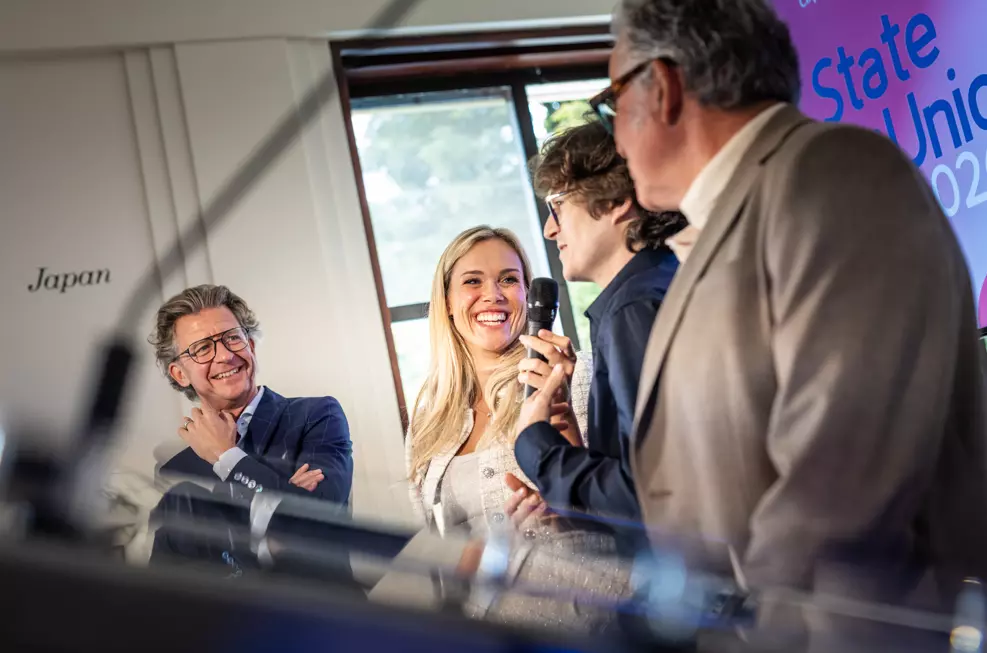
Stefan Lameire, Virginie Claes, Nicolas Jacqmin and Marc Frédérix
Need for Harmonization
As the first speaker of the day, Adrian Baschnonga (EY) immediately set the tone. He discussed the many changes in consumer behavior, technology, market concentration, and regulation, including their significant impact on the media and advertising landscape.
That opening presentation also included some results from the CEO Outlook Survey, with specific attention to the responses from the media executives on that panel. It turns out that, in their view, geopolitical tensions pose the most significant risk for the coming twelve months.
- Geopolitical tensions (54%)
- Macroeconomic volatility (31%)
- Technological disruption, including AI risks (26%)
- Disruption of trade and supply chains (21%)
- Regulatory uncertainty (20%)
As the afternoon progressed, the list of challenges grew in scope, but the solutions and the path forward also became clearer. In light of the dominance of big tech – platforms currently account for 56% of digital media investments in our country – the typically Belgian fragmentation was among the topics discussed. The message? Greater (local) clout requires regulatory harmonization, and that at multiple levels.
Responsibility
Gauthier Elslander (BPX) took the stage to discuss “The Responsible Media Imperative,” an initiative that primarily targets governments and subsidized organizations but also sends a clear message to commercial advertisers. “Set a good example by prioritizing your communication and advertising budgets for media that contribute to the local economy, society, and quality.” And thus not in the mega-platforms of Big Tech – Donald Trump’s buddies.”
Incidentally, this intended shift isn’t just about democratic values or vague principles. Figures from the Ortelius study outline a local multiplier effect, whereby shifting 6 million euros of government funding from the platforms to local digital media has the following effects:
- a GDP increase of 9.9 million euros
- 60 additional high-value FTEs in Belgium
- 2.38 million euros in direct social and tax revenue for the treasury
In his incisive argument, Gauthier Elslander did not fail to analyze one of the main causes of the current imbalance in investment. “There is a fundamental imbalance in how reach and contact quality are measured. While local media voluntarily submit to the strict, independent, and scientific oversight of the CIM, international platforms provide self-reported statistics.” This seems to contradict the principle of impartiality, he argues. “A fleeting scroll of one to two seconds counts as a full view of an ad. And a view of content is, in reality, nothing more than the start of a stream.”
Trust is the key
Of course, the term “artificial intelligence” came up several times during the State of the Union, with insights from various perspectives. For example, there was discussion of potentially higher token costs in the near future; several experts touched on the issue of theft – both in terms of copyright and reach; and Marc Federix (Advertising Council) drew a connection between AI use and trust, offering twelve concrete guidelines as part of a passionate plea for active self-regulation.
Perhaps even more than self-regulation, the concept of trust was the central theme. “People trust local media more than big tech,” Gauthier Elslander had already noted – a valid point that Matt Bourn of the British Advertising Association expanded upon shortly thereafter. “Trust in advertising – and in the media environments where these ads appear – also makes a measurable contribution to marketing effectiveness.” Good to know, because that is precisely where the market’s priorities logically lie, as the constructive CMO debate confirmed.
How do you build trust? Through responsible media choices, of course, but just as much by maintaining a healthy dose of creativity. The British expert thus rounded out a formula that Petra De Roos had previously thrown into the group discussion. “Exceptional creativity multiplies the return on every euro by 11 to 12 times.”
Great Creative - Higher Public Enjoyment - Stronger Trust - Financial Growth
While Bourn and de Roos were primarily discussing advertising creativity, Valérie Morfitis (Ads & Data) highlighted the fascinating link between media creativity during the lively closing CEO debate, which also featured Wim Jansen (DPG Media; as a last-minute replacement for RTL CEO Guillaume Collard), Peter Quaghebeur (Mediafin), and Koen Verwee (Mediahuis), highlighted the fascinating link to media creativity. “Without quality journalism and quality entertainment, you do indeed lose your audience to companies like Netflix. And investments still follow the consumer.”
From Plan to Execution
Another top international guest was Kerstin Niederauer-Kopf. She is CEO of AGF, the German counterpart to the CIM, and emphasized the importance of independent media measurement. She also advocated for common measurement standards for local and global platforms, with a European framework that protects that independence and comparability. In other words, a level playing field – a concept that came up frequently.
Getting the mega-platforms on board with the national measurement methodology is precisely one of the next steps of the CIM ONE project. This project is set to move from planning to implementation in 2027, with the rollout of the new metrics – Total Video, Total Audio, and Total Publishing – and the opening up of data that will benefit all players within the ecosystem. In total, this initiative comprises more than twenty subprojects, which will be implemented in three phases.
The need for harmonization certainly applies at the European level as well. Like his German colleague, Koenraad Deridder (CIM) discussed the difficult relationship between the European Media Freedom Act (EMFA) and the Digital Omnibus Package, which, among other things, regulates data protection laws. “On the one hand, Europe demands accurate measurements, but on the other hand, it makes the data collection required for that impossible.” Fortunately, thanks to the strong collaboration within the Audience Measurement Coalition (AMC), these systemic flaws are being eliminated, including through a transparent distinction between measuring media reach and commercial targeting.
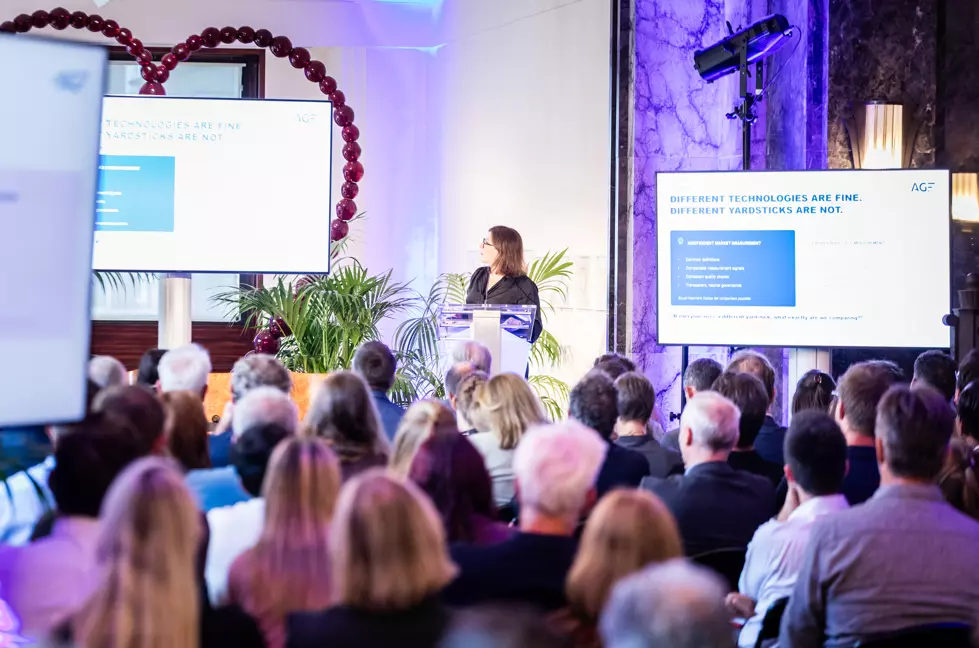
Kerstin Niederauer-Kopf, CEO AGF
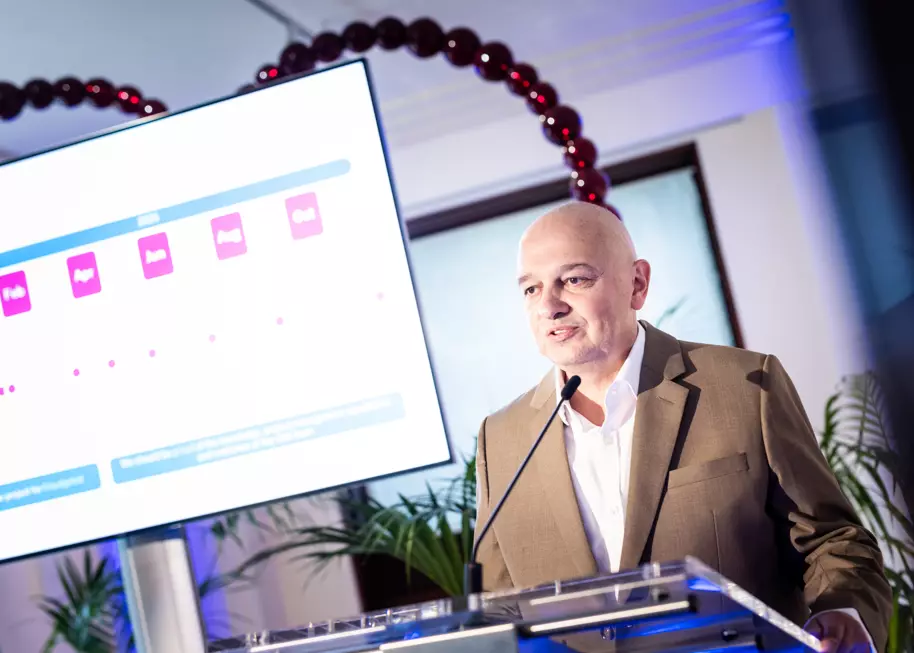
Koenraad Deridder, General Manager CIM
Local media and their own barriers
A measurement infrastructure that provides an accurate picture of reach and effectiveness will drive advertisers more toward local media. Not out of charity – the CMOs on stage made it clear that they fulfill a commercial role in addition to a social one – but precisely because of the expected return on investment. “If they can deliver better – at least equally good – results, local players will be our preferred choice.”
However, they’ll be tasked with lowering their barriers to entry and streamlining media buying processes. “The biggest threat to local media isn’t a lack of quality, but a lack of simplicity,” says Nathalie L’Hoir (UMA). Brands that advertise demand not only impact but also efficiency and ease of use – qualities with which Meta and Google naturally set themselves apart. Combined with Wim Jansen’s (DPG Media/VIA) idea to “provide a single common commercial gateway” for audiovisual media, attendees took home plenty of food for thought.
“My generation wants to build its future.” Nicolas Jacqmin
Nicolas Jacqmin on his first State of the Union and the need to turn good intentions into action
For Nicolas Jacqmin, the State of the Union was a first. As a young professional at WPP Media Belgium and one of the winners of the CIM Summer Quiz, he won an invitation to the event. We asked him which conclusions he himself draws from the day.
Nicolas, this was your first State of the Union. What common thread do you take away from the day?
The day was rich in information, initiatives and predictions, some more likely than others. But if I had to retain one common thread, I would look at the heart-shaped sculpture that accompanied our presentations and debates. This work by Jean-Michel Othoniel, entitled ‘Le voyage de la joie’, is made up of spheres, each with its qualities, flaws and scars.
Like the people who spoke today, each follows their own path and carries their own perspective, expectations and fears. But together, they form a heart. To me, it symbolises our common objective: the joy of building a strong and sustainable Belgian ecosystem.
What elements need to come together to build that ecosystem?
From what I was able to see today, its future will not depend on a single solution, but on several elements coming together: responsible standards, smart regulation, independent measurement, trustworthy advertising and the willingness to collaborate.
We will need local content and local media so that the Belgian advertising world has quality environments. They are tools. And the real question with AI tools, or any other tools, is how we use them to protect, strengthen and build.
Why is direction so important right now?
We are going through a period of extraordinary change and, looking around this room, I see the people who are at the helm of the ship.
What do you hope will happen to the proposals and commitments discussed during the State?
I hope that the proposals and commitments discussed today become more than good intentions and, like some green initiatives, should not have to wait until 2050 to be implemented, and that they become the foundations of a sustainable, competitive and relevant ecosystem for the decades to come.
This was said several times today, less often than the name Les Binet, but: ‘walk the talk’.
As a young professional, what message would you like to give the generation leading the industry today?
You built this industry through your passion for media. My generation wants to build its future for the same reason.
We need you to guide the ship safely through the storm so that, one day, we can take the helm too.
Editorial note: the answers are based exclusively on Nicolas’ own written reflections; no new substantive positions have been added.
“We are at a tipping point. Now we need to turn the momentum into action together.” Stefan Lameire
Interview with Stefan Lameire, Chairman of the CIM, following the third State of the Union
Following CIM’s third State of the Union, Chairman Stefan Lameire takes stock. He saw a sector remarkably aligned on the challenges ahead and on the need for greater collaboration. But good intentions are not enough. “We are in the messy middle. Now we need to move from intentions to choices and action.”
Stefan, what stayed with you most from this third State of the Union?
The positive energy. And above all, the willingness to move forward together.
You could really feel that during the debates with advertisers’ CMOs and media CEOs. There was a very open discussion about our collective challenges, but equally about the individual responsibility each stakeholder has.
Collaboration does not mean expecting someone else to solve the problem. Media companies, advertisers, agencies, CIM and government each have their own role to play. The strength lies in bringing those responsibilities together in support of the same local ecosystem.
So there are many good intentions. The next step is to make sure we turn them into choices and action.
Can you already see that shift from intention to action happening?
Certainly around CIM ONE. Support is growing, the first results are becoming visible, and more and more parties seem prepared to genuinely put their shoulders to it together.
But for me, this is about more than CIM ONE. It is about our capacity to become stronger together as a local media and advertising ecosystem.
Belgium is, of course, a relatively small media market. Isn't that a structural disadvantage?
Being small is a limitation, but it can also be an advantage. During the State, someone even made the comparison with Asterix. Perhaps that is not such a bad comparison after all.
The large international tech platforms look at the major markets first and at us afterwards. In the meantime, we can look beyond our borders and learn from what works elsewhere. Not to copy it blindly, but to translate it into our own reality.
As a small ecosystem, we can connect faster, learn faster and move faster. At least if we choose to do so together. The contributions from Adrian Baschnonga, Kerstin Niederauer-Kopf and Matt Bourn brought some particularly valuable international perspectives in that respect.
You also emphasise the role of government. Why?
Because government is a fundamental partner in strengthening and protecting our local media and advertising ecosystem.
That is why I found it important that Karim Ibourki and Cieltje Van Achter shared their perspectives, and that representatives of both the French-speaking and Flemish authorities could hear directly what the sector is facing today and what is needed to develop our market sustainably.
The same logic applies here: everyone acts from their own responsibility, but with an understanding of the bigger picture.
You describe this State of the Union as a tipping point. Why?
This was our third State. The first time, we took stock. The second time, we mapped the way forward and introduced CIM ONE. This time, for the first time, we were able to show concrete progress.
I often use the quote: “Change is hard in the beginning, messy in the middle and gorgeous at the end.” Today, we are right in that messy middle. It is not finished yet, not everything is clear, and not everyone is moving at the same pace.
But I do feel that we are approaching the point where turning back is no longer the easiest option.
When does a change like this really become irreversible?
There is interesting research on social conventions showing that change can suddenly accelerate once a sufficiently large minority consistently adopts a new behaviour. A figure of around 25% is often cited.
After this State, my feeling is that such a point is coming within reach. Not because everyone already agrees on everything, but because a sufficiently strong group is emerging that is prepared to actually move.
What do you now expect, concretely, from the people who attended the State?
That they become influencers themselves.
We all know the power of influencer marketing. Perhaps we should apply that logic to ourselves for once. Do not leave the energy of the State in the room; create a ripple effect.
Carry the story of CIM ONE and of a stronger local ecosystem further within your own organisation. And not only among the people who work with media every day. Take the conversation especially to the places where strategic choices are made: executive committees, boards and shareholders.
Do not wait for ‘the sector’ to move. Help create the movement yourself. Because an ecosystem is ultimately nothing abstract. It is us.
If you had to sum up the third State of the Union in one thought?
Small country. Big momentum. Plenty of good intentions. Now we simply need to make it happen together.
The CIM and the Advertising Council would like to thank all attendees and speakers for their participation: Adrian Baschnonga (EY), Gauthier Elslander (BPX), Karim Ibourki (CSA), Kerstin Niederauer-Kopf (AGF), Luc Suykens (UBA), Nathalie L’Hoir (UM/UMA), Petra De Roos (ACC), Matt Bourne (Advertising Association), Alex Thoré (VAR), An Caers (ING), Annelore Van Hove (Delhaize), José Fernandez (D’Ieteren), Steven De Deyne (Proximus), Jan De Moor (Bauer Media Outdoor Belgium), Thierry Hugot (Groupe Rossel/BPX), Wim Jansen (DPG Media/VIA), Danny Devriendt (Omnicon Media), Koen Verwee (Mediahuis), Peter Quaghebeur (Mediafin), Valérie Morfitis (Ads & Data), Nicolas Jacqmin (WPP Media Belgium), and Pierre Kroll.
Relive this event via the State Clips
CEO’s, experts en opinieleiders vertellen in korte videofragmenten hoe media, reclame en technologie samen kunnen floreren in een snel veranderende markt.In short video clips, CEOs, experts, and thought leaders explain how media, advertising, and technology can thrive together in a rapidly changing market.
Watch the State Clips through the button hereunder.
Recent news

CIM Establishment Survey 2026: Belgians are using their digital devices in increasingly diverse ways


Press Audience figures now available (BPS 2026)
The CIM today publishes the latest audience figures for the Belgian press in the CIM…